Ordering Custom Uniforms for the First Time? | JP Inter Apparel
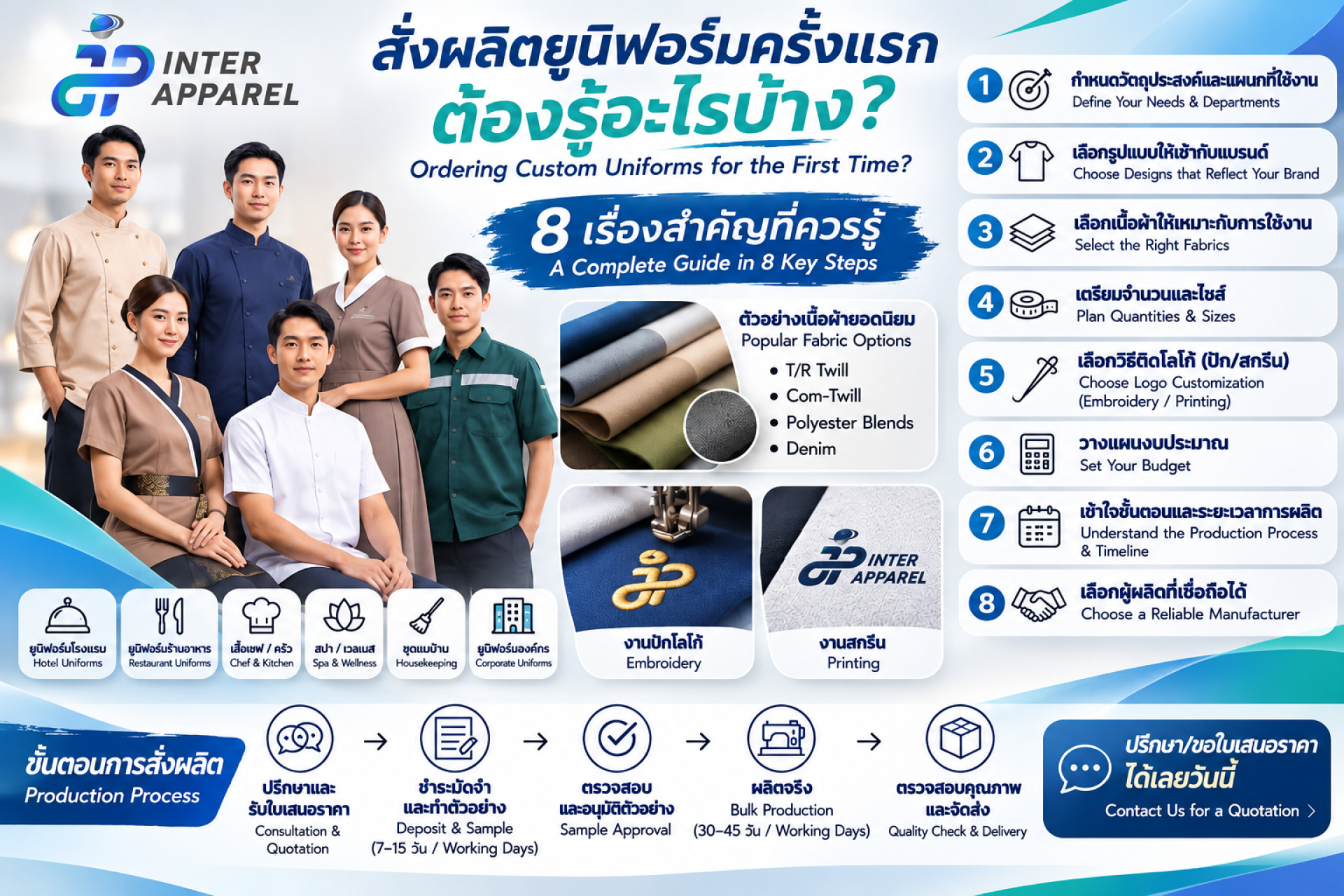
Ordering Custom Uniforms for the First Time?
A Complete Guide for Hotels, Restaurants & Businesses to Custom Uniform Ordering
Ordering custom uniforms for the first time can seem complicated. From selecting the right fabrics and designs to determining quantities, sizes, logo placement, budgets, and production schedules, several important factors should be considered before placing an order.
For hotels, restaurants, spas, and corporate organizations, uniforms are more than everyday workwear. They represent your brand identity, professional standards, and commitment to delivering an exceptional customer experience.
At JP Inter Apparel, we specialize in custom uniform design and manufacturing for hospitality and service businesses.
To help you make informed decisions, we have prepared this practical guide covering 8 essential things to know before ordering custom uniforms.
1. Define Your Uniform Requirements
Before ordering custom uniforms, start by identifying the purpose of each uniform and the working environment in which it will be worn.
Different departments require different levels of comfort, durability, functionality, and presentation.
For example:
-Hotel Uniforms: Elegant and professional designs that reflect the hotel's brand identity and service standards.
-Restaurant Uniforms: Comfortable and functional clothing that allows staff to move freely throughout their shifts.
-Chef & Kitchen Uniforms: Practical workwear suitable for busy kitchens, frequent washing, and demanding working conditions.
-Housekeeping Uniforms: Durable, comfortable garments that support mobility and everyday cleaning activities.
-Spa & Wellness Uniforms: Refined and comfortable designs that create a relaxing, professional atmosphere.
-Corporate Uniforms: Coordinated professional attire that reinforces brand consistency and corporate identity.
Understanding your team's working requirements will help your uniform manufacturer recommend suitable designs, fabrics, and construction details.
2. Choose Uniform Designs That Reflect Your Brand Identity
A well-designed uniform should communicate your organization's personality, values, and visual identity.
Colors, silhouettes, collars, buttons, pockets, and decorative details all contribute to the overall appearance.
For example, a luxury hotel may prefer navy blue, charcoal gray, or sophisticated neutral tones to create an elegant and timeless impression.
A contemporary restaurant may choose minimalist uniforms complemented by distinctive aprons, contrast piping, or embroidered branding.
Before contacting a custom uniform manufacturer, prepare the following information:
-Reference images or preferred uniform styles
-Corporate colors or brand color codes
-Company logo files
-Uniform requirements for male and female staff
-Preferred collars, pockets, buttons, and decorative details
-Department-specific requirements
If you do not have a finalized design, JP Inter Apparel can assist in developing uniform styles based on your brand identity and operational needs.
3. Select the Right Fabrics for Your Uniforms
Fabric selection is one of the most important decisions in custom uniform manufacturing.
The right material influences comfort, durability, appearance, maintenance requirements, and overall production costs.
Different fabrics offer different advantages depending on their composition, weight, weave, and finishing.
T/R Twill (Polyester/Rayon Twill)
T/R Twill combines polyester and rayon fibers in a twill weave.
Depending on its composition, this fabric can offer a refined appearance, comfortable drape, and a professional finish.
It is commonly considered for uniforms that require a polished and structured appearance.
Com-Twill (Polyester/Cotton Twill)
Com-Twill combines polyester and cotton fibers in a twill construction.
Its performance depends on the fabric composition and specifications, but suitable varieties can provide durability and practical maintenance for everyday uniforms.
It is an option worth considering for service uniforms and workwear requiring frequent use.
Polyester Blend Fabrics
Polyester blends are available in various compositions and finishes.
Depending on the material specifications, they may offer shape retention, durability, and easy-care properties.
Denim Fabrics
Denim is often selected for restaurant aprons and contemporary hospitality uniforms.
Its distinctive texture creates a modern and casual appearance, while fabric weight should be chosen according to the intended working environment.
Professional Tip: Do not select fabrics based on appearance or price alone. Consider working conditions, washing frequency, comfort, and long-term maintenance.
4. Prepare Your Order Quantities and Size Requirements
The quantity of uniforms ordered can significantly affect production costs.
Larger orders may provide more efficient production planning, while smaller orders or highly customized designs may involve different cost considerations.
Before requesting a quotation, prepare:
-Total quantity required
-Quantities by design and color
-Size breakdown for each uniform style
-Male and female uniform requirements
-Special or extended sizes
-Additional stock for future employees
If the final size breakdown is not yet available, an estimated quantity can be provided for an initial quotation.
However, accurate sizing should be confirmed before bulk production begins.
Professional Tip: Review the manufacturer's size chart and measurement instructions carefully to minimize sizing errors.
5. Choose the Right Logo Customization Method
Your company logo is an important part of your uniform's identity.
The right logo application can enhance brand recognition while maintaining a professional appearance.
Embroidery
Embroidery is commonly used for hotel uniforms, chef jackets, corporate shirts, and professional workwear.
It creates a textured and refined appearance and can be suitable for repeated use when properly specified.
Screen Printing
Screen printing is another option for applying logos or graphic designs.
Its suitability depends on fabric type, design complexity, colors, and production quantity.
Before ordering, prepare a high-quality logo file and specify the desired placement, dimensions, and colors.
Your uniform manufacturer can then recommend an appropriate application method.
6. Plan Your Uniform Production Budget
Custom uniform pricing depends on several factors, including:
-Fabric type and quality
-Design complexity
-Order quantity
-Embroidery or printing requirements
-Special trims and accessories
-Extended sizes
-Production schedules and delivery requirements
For example, a simple uniform shirt and a fully customized hospitality jacket may involve different material requirements, construction methods, and production costs.
Providing an estimated budget helps the manufacturer recommend suitable fabrics, design options, and production solutions.
Professional Tip: When comparing quotations, consider fabric specifications, craftsmanship, customization details, and production terms rather than focusing only on the unit price.
7. Understand the Custom Uniform Production Process
Custom uniform manufacturing involves several stages, from initial consultation to final delivery.
At JP Inter Apparel, the general production process includes:
Step 1 — Consultation & Quotation
Our team reviews your uniform requirements, reference designs, quantities, fabric preferences, and logo details to prepare a quotation.
Step 2 — Deposit & Sample Development
Once the required deposit and complete production details have been received, sample development begins.
Estimated sample development: 7–15 working days.
Step 3 — Sample Review & Approval
Clients review the sample garments, including fit, fabric, colors, construction details, and logo placement.
Any necessary adjustments should be completed before final sample approval.
Step 4 — Bulk Production
Bulk production begins after all required samples have been approved.
Estimated bulk production: 30–45 working days after final sample approval.
Step 5 — Quality Inspection & Delivery
Completed garments are inspected and prepared for delivery according to the agreed terms.
Important Notes:
-Production timelines are calculated in working days.Company holidays, factory closures, and public holidays are excluded.
-Sample revisions or delayed approvals may affect the production schedule.
-Urgent orders may be considered depending on production capacity and scheduling availability.
-Planning ahead is strongly recommended, especially for hotel openings, restaurant launches, and corporate events.
8. Choose a Reliable Custom Uniform Manufacturer
Selecting the right manufacturer is about more than finding the lowest price.
A reliable manufacturing partner should understand your business requirements and provide clear communication throughout the production process.
Important considerations include:
-Experience with your industry
-Understanding of uniform functionality
-Fabric and material options
-Custom design capabilities
-Sample development procedures
-Quality control processes
-Transparent production timelines
A manufacturer familiar with hospitality operations can help recommend practical solutions for different departments.
For example, restaurant staff may require freedom of movement, housekeeping teams may prioritize durability, and kitchen employees may need fabrics suitable for frequent laundering.
At JP Inter Apparel, we focus on combining thoughtful design, material selection, and detailed craftsmanship to create uniforms that support both professional appearance and everyday functionality.
Frequently Asked Questions About Custom Uniform Orders
Can I order custom uniforms without an existing design?
Yes. You can provide reference images, preferred colors, brand guidelines, or general design ideas.
Our team can help develop suitable uniform options based on your requirements.
Is there a minimum order quantity?
Minimum order quantities may vary depending on the product type, fabric selection, and customization requirements.
Please contact our team with your estimated quantity for further information.
How long does custom uniform production take?
Sample development generally takes approximately 7–15 working days.
Bulk production typically requires 30–45 working days after final sample approval, depending on the design and order quantity.
Can my company logo be embroidered on the uniforms?
Yes. Logo embroidery and other suitable branding methods can be discussed based on your design and fabric requirements.
What information should I provide to request a quotation?
We recommend preparing your preferred uniform design, estimated quantity, size requirements, fabric preferences, color selections, logo files, and desired delivery date.
Providing complete information helps us prepare a more accurate quotation.
Start Your Custom Uniform Project with JP Inter Apparel
Ordering custom uniforms for the first time does not have to be complicated.
With clear planning, suitable fabric selection, accurate sizing, and the right manufacturing partner, your business can create uniforms that reflect its identity and professional standards.
JP Inter Apparel — Uniform U Need Form
Precision in Every Thread.
We specialize in custom uniform design and manufacturing for hotels, restaurants, spas, and corporate organizations.
From the initial concept to the finished garment, our team is committed to delivering carefully designed uniforms that combine professional presentation with practical functionality.
Looking for a custom uniform manufacturer in Thailand?
Contact JP Inter Apparel today to discuss your project, explore design options, and request a personalized quotation.
JP Inter Apparel — Your Partner in Professional Uniform Solutions.